
James and Bethany, August 2024
Sacraments at St Aloysius'
As we read in 'The Catechism of the Catholic Church(opens in new tab)', "the whole liturgical life of the Church revolves around the Eucharistic sacrifice and the sacraments. There are seven sacraments in the Church: Baptism, Confirmation, Eucharist, Penance, Anointing of the Sick, Holy Orders, and Matrimony".
We also read in the Catechism(opens in new tab) that "all the sacraments... have as their goal the last Passover of the child of God which, through death, leads us into the life of the Kingdom (where we) look for the resurrection of the dead, and the life of the world to come". So funerals take on a distinctive sacramental character; it is a rite of passage and farewell, where we usher on to the next life those who have died, where they will meet God face to face.
Below, we introduce each of the Seven Sacraments, the Rite of Christian Funerals, and the Rite of Christian Initiation of Adults (RCIA) looking at how these are prepared for and received at St Aloysius'.
The Seven Sacraments
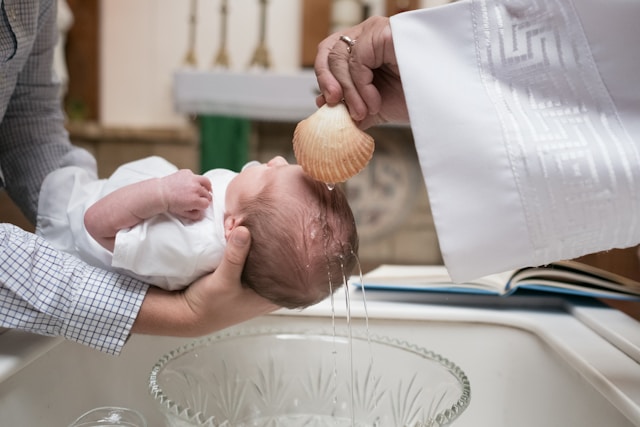
The Sacrament of Baptism
Baptism marks the essential first step in a life of faith—a foundational Sacrament for your child, or for any adult being welcomed into the Church. Our parish community is delighted to share in your joy and looks forward to supporting you on this meaningful journey.
To begin the process, please complete this form and return it to the parish office(opens in new tab). Parents celebrating the baptism of their first child are asked to attend a short preparation session prior to the ceremony.
To assist us in completing the registration details, please bring the following documents to your initial meeting:
Child's Birth Certificate
Parent's Baptism Certificate – Required for at least one parent. (If both parents are baptised Catholics and were married in the Church, a Catholic Marriage Certificate is acceptable in lieu of a baptism certificate).
Godparents' Baptism Certificates – Required for each godparent, alongside proof of Confirmation for at least one godparent. (A Catholic Marriage Certificate may also serve in place of a baptism certificate).
We look forward to assisting your family as you prepare for this sacred moment.
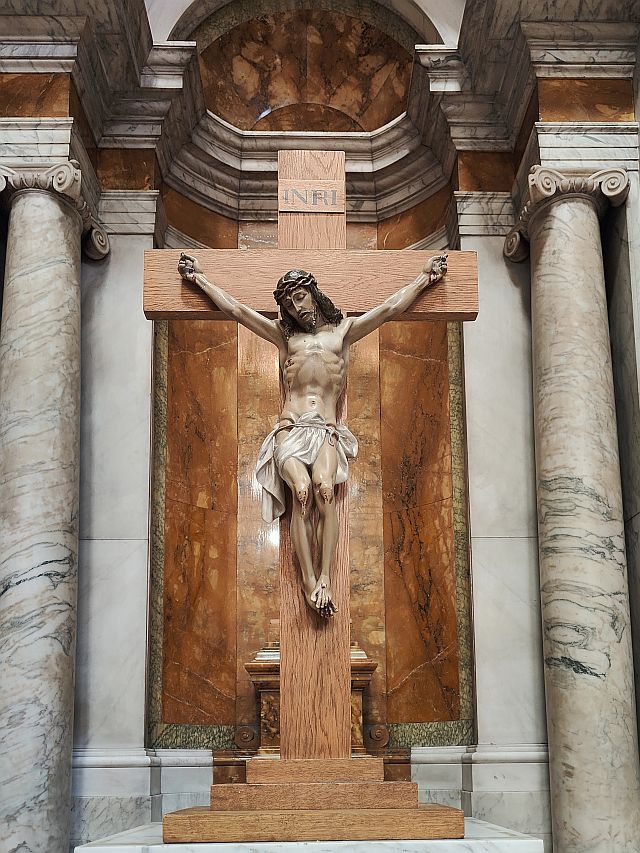
Penance and Reconciliation
Upon reaching the age of reason (around age seven), baptised children are to be presented for the Sacrament of Penance and Reconciliation (Confession).
In the Archdiocese of Glasgow, this milestone is traditionally celebrated in Primary 3 during the season of Lent.
Immediate preparation typically takes place through Catholic primary schools, though parents should contact one of the parish staff to discuss any specific needs or arrangements.
This sacrament goes by various names, including Confession, Penance, Penance and Reconciliation, or simply the Sacrament of Reconciliation—the term most frequently used by children today.
Every name reflects a vital dimension of the sacrament: acknowledging wrongdoing, feeling genuine sorrow, and seeking unity with God and the Church. Ultimately, entering into the Sacrament of Reconciliation allows us to encounter Jesus directly and experience His boundless mercy and healing.
Provision of the Sacrament of Reconciliation by Jesuit priests has been one of the most important daily ministries that we offer at St Aloysius Church. The sacrament is available for 30 minutes before every Mass and on request after the 8am on weekdays. Please follow the sign at the rear of the church.
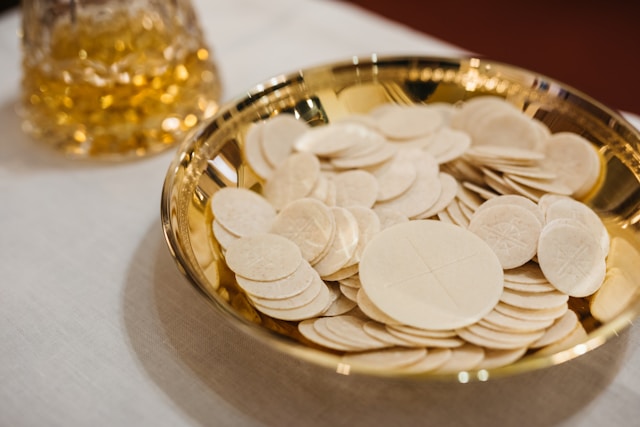
Holy Communion / Eucharist
Once they reach the age of seven, baptised Catholic children can receive First Holy Communion, provided they are prepared and have also received the Sacrament of Reconciliation.
Preparation is usually arranged through Catholic primary schools, though you should speak with one of the parish staff about your specific needs.
In the Archdiocese of Glasgow, First Holy Communion takes place in Primary 4 (ages 7–8), usually shortly after Easter.
Parents must meet with the parish clergy in advance, as a child cannot receive the sacrament without a parent or carer's clear consent.
To support the promises made at baptism, parents and carers are expected to bring their child to Mass every Sunday and practice regular family prayer at home.
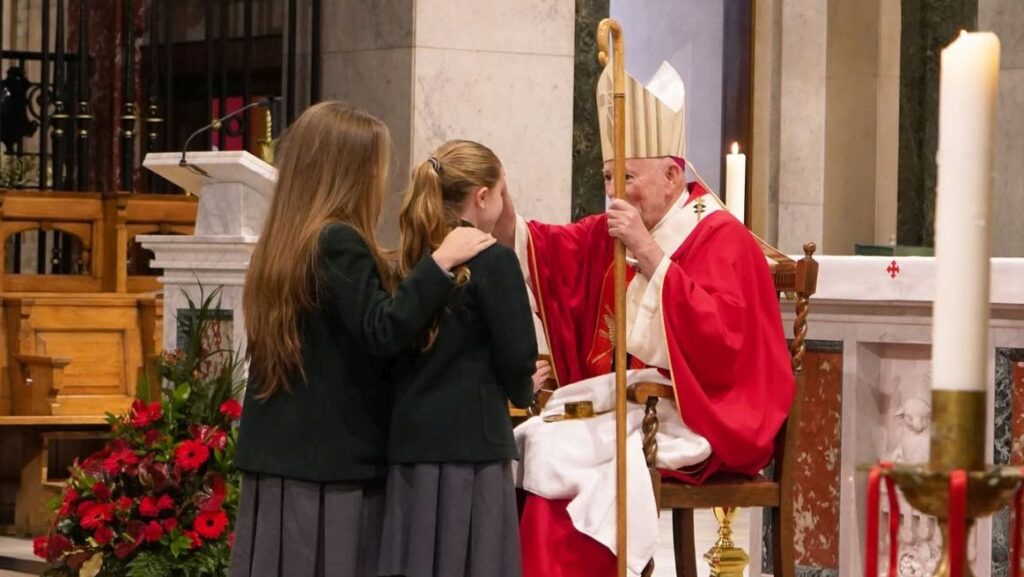
The Sacrament of Confirmation
Confirmation is a special moment in your child’s faith journey— an outpouring of the Holy Spirit that completes and strengthens the grace first given at Baptism.
In the Archdiocese of Glasgow, children are invited to receive this Sacrament in Primary 4 (around ages 7–8). All baptised Catholic children are encouraged to take this step.
Getting Started as a Parent Passing on the faith is a shared journey. Before your child receives the Sacrament, parents (or guardians) will meet with our parish clergy. Because your support is central to your child’s spiritual growth, a child can only receive Confirmation with the clear consent and desire of those who care for them.
Choosing a Sponsor Every child needs a Sponsor to walk alongside them.
Who can be a sponsor? A Sponsor must be a practicing Catholic who is at least 16 years old and has been Confirmed themselves.
Role model: They should be someone who strives to live out Gospel values and Church teachings, serving as a positive guide in Christian living.
Baptism Godparents: If possible, a child's Catholic godparent makes an ideal sponsor, though another eligible person may be chosen.
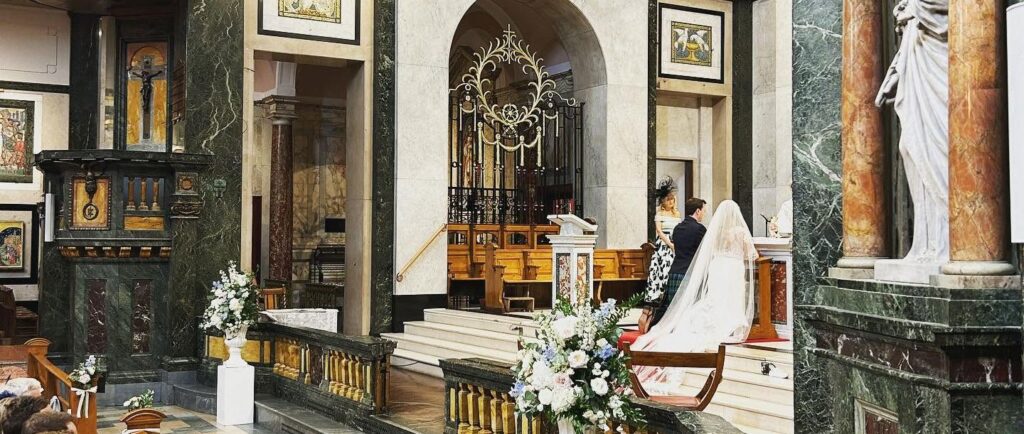
Planning Your Wedding at St Aloysius
Congratulations on your decision to marry! We are delighted to support you as you prepare for this special sacrament.
First Steps & Paperwork
St Aloysius Parishioners: Please speak directly to one of our priests to begin your arrangements.
Visiting Couples: If you live outside our parish boundaries, please contact your local parish priest first. The priest in the parish where you currently reside is responsible for completing your pre-marriage formalities.
Notice Period Please give us plenty of notice to secure your preferred date and allow sufficient time for all preparation and canonical paperwork. We require a minimum of 6 months’ notice before your wedding date.
The Meaning of Catholic Marriage In the Catholic tradition, marriage is a lifelong, exclusive union between one man and one woman. It is built on mutual consent and a commitment to lifelong fidelity, permanence, and the loving task of raising children together while supporting each other’s well-being.
Parishioners are welcome to marry here, provided neither person is restricted by Church or civil law. If you have any questions about eligibility or church regulations, our priests will be glad to discuss them with you.
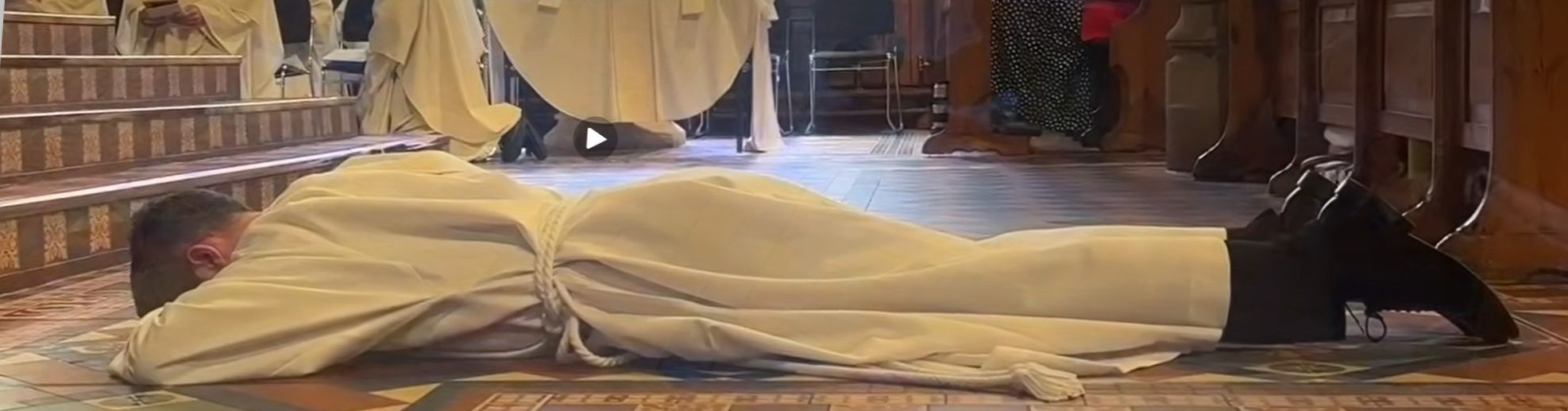
The Sacrament of Holy Orders
Through the Sacrament of Holy Orders, men who offer themselves to God are ordained to serve the spiritual needs of the Catholic Church in three distinct degrees: deacon, priest, and bishop.
Like all sacraments, Holy Orders is rooted in Baptism, which is the doorway to receiving all other sacraments. Ordination follows a sequential path: a man must first be ordained a deacon before becoming a priest, and a priest before becoming a bishop.
Sacramental Roles & Faculties
Each level of Holy Orders carries specific spiritual faculties and responsibilities:
Bishops: Possess the “fullness of the priesthood” and hold the authority to administer all seven sacraments: Baptism, Reconciliation (Penance), Holy Eucharist, Confirmation, Matrimony, Anointing of the Sick, and Holy Orders.
Priests: Serve as spiritual shepherds who love and know their flock. They are authorized to administer five sacraments: Baptism, Reconciliation, Holy Eucharist (the Mass), Matrimony, and Anointing of the Sick.
Deacons: Ordained for service and authorized to celebrate two sacraments: Baptism and Matrimony (when celebrated outside of a Nuptial Mass).
A Call to Service
Holy Orders confers both a sacred dignity and a profound obligation: to obey the Holy Father and faithfully serve the People of God.
Is God Calling You?
If you feel a gentle whisper in your heart calling you to the priesthood or diaconate, please speak with one of our parish priests. We would be delighted to pray with you, answer your questions, and connect you with the Jesuit or the Diocesan Vocations Director.
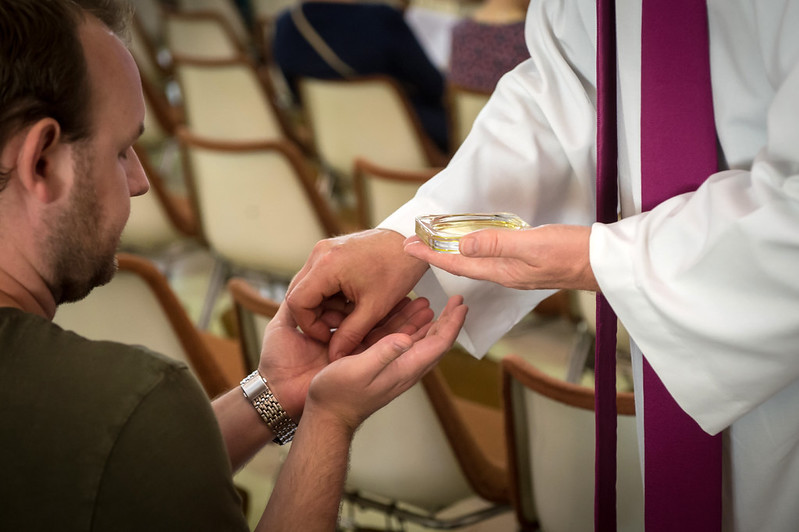
The Sacrament of Anointing of the Sick
In the Sacrament of Anointing of the Sick, Christ touches us through the ministry of the priest to offer strength, comfort, and healing. While we always pray for physical healing according to God’s will, the primary grace of this sacrament is spiritual. It imparts the Holy Spirit's gifts of peace and courage to help navigate the burdens of serious illness or the frailty of old age. Ultimately, Christ's healing power reminds us of His ultimate victory over sin and death through His Resurrection.
Scriptural Foundations The Sacrament is rooted in the Gospels and the early Church. Mark’s Gospel notes that the disciples "anointed with oil many who were sick and cured them" (Mark 6:13). St. James elaborates:
"Is any among you sick? Let him call for the presbyters of the Church, and let them pray over him, anointing him with oil in the name of the Lord; and the prayer of faith will save the sick man, and the Lord will raise him up; and if he has committed sins, he will be forgiven." — James 5:14–15
Who May Receive the Sacrament? There is no need to wait until someone is at the point of death to request this sacrament. It is appropriate for both adults and children whenever a serious health condition arises. You may receive the Sacrament if:
You are facing serious illness, major surgery, or severe frailty: A careful judgment regarding the serious nature of the condition is all that is required.
You need it more than once: You can be anointed again if your health worsens or if you face another serious illness.
You are a baptized Catholic: Non-Catholic Christians who are in danger of death and unable to reach a minister from their own communion may also request the Sacrament.
Requesting Anointing If you or a loved one are in need of the Sacrament of Anointing of the Sick—whether at home, in the hospital, or before a medical procedure—please contact the parish office to arrange a visit with a priest.
The Rite of Christian Funerals
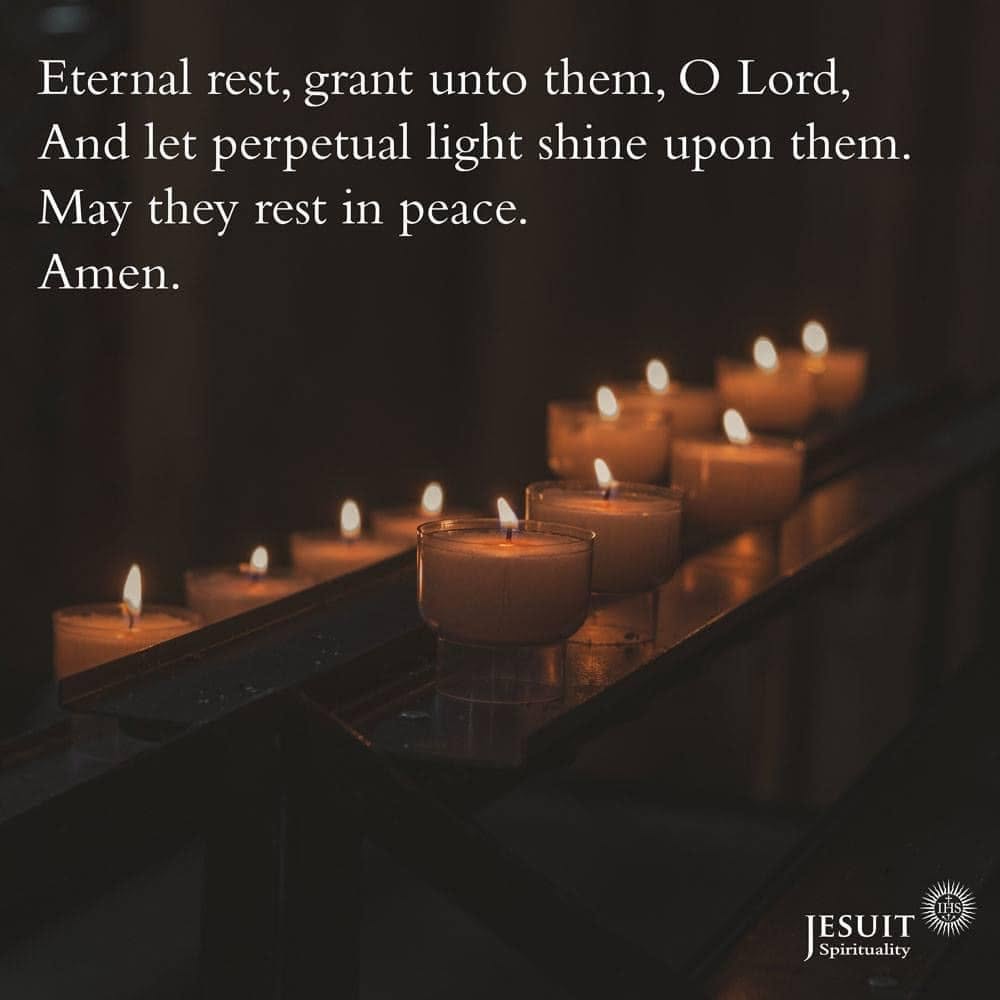
Planning a funeral is a deeply personal process, done at a time of great sorrow, and our parish team will support you at every step on the journey.
Arranging a Service Funeral arrangements can be made directly with the parish office or coordinated through your chosen Funeral Director. Once a date and time are confirmed, the priest will meet with your family to discuss the liturgy, readings, and music choices.
Orders of Service Guidelines To ensure everything runs smoothly and accurately, please submit a draft of your Order of Service to the parish office for review before printing.
Please note: For Requiem Masses, we kindly request that appeals or requests for charitable donations are not printed inside the booklet.
Structure of a Catholic Funeral Mass
Introductory Rites: Opening Hymn, Greeting, Opening Prayer
Liturgy of the Word: Old Testament Reading, Responsorial Psalm, New Testament Reading, Gospel Acclamation (Alleluia, omitted during Lent), Gospel (read by a priest or deacon), Homily, Prayers of Intercession
Liturgy of the Eucharist: Offertory Hymn, Our Father, Lamb of God, Communion Hymn or Music
Final Commendation: Prayers of Farewell, Recessional Hymn or Exit Music
The Rite of Christian Initiation of Adults

The Rite of Christian Initiation of Adults (RCIA) is the journey by which Adults are received into the Catholic Church. The journey is marked with celebrations throughout to sustain and support the seekers in their desire to share in the sacramental life of the Church.
Beginning with a period of inquiry, the seeker has time to ask questions and find out where God is calling in their lives. This leads to the Rite of Acceptance when those seeking baptism are formally accepted by the Church and the community as catechumens.
A period of formation follows in the parish community where the deepening of faith continues with the help of priests and people who accompany the catechumens and candidates (those already baptised and seeking full communion with the Catholic Church).
Prior to the First Sunday of Lent, the catechumens and candidates, together with their sponsors and those who are accompanying them on the journey of faith, are invited to participate in a day of retreat.
What is the process of the RCIA?
Period of Evangelisation and Pre-catechumenate
This is a time of no fixed duration where the seeker or inquirer has the opportunity to be opened to the values of the Gospel and the beginning of the journey of faith.
First Step: Acceptance into the Order of Catechumens
This is the first public step taken by the seeker and marks the beginning of the period of the catechumenate and acceptance of the seeker by the Church and indeed the worshipping community.
Period of the Catechumenate
During this period, the faith and growth of the catechumen is nurtured and strengthened. This is enhanced by celebrations of the Word of God and prayers of blessing.
Second Step: Election or enrolment of names
This rite is celebrated in the Cathedral every year of the First Sunday of Lent. For the first time, all those seeking initiation into the Church community from each parish in the Archdiocese come together. It is during this celebration that the catechumens and candidates are declared "elect" to receive and share in the sacramental life of the Church.
Period of Purification and enlightenment
During the season of Lent, the elect are called to deeper reflection and conversion in preparation for the celebration of the Sacraments at the Easter Vigil. This is helped by the celebration of "scrutinies" and presentations with the Creed and the Lord's Prayer.
Celebration of the Sacraments of Initiation
The Easter Vigil is the highlight of the Church's year, and it is normally at this celebration that the Christian Initiation of Adults take place. Those who have been elected are initiated into the Church by Baptism, Confirmation and Eucharist.
Mystagogy
The time following Christian Initiation is a time of celebration for the newly baptised and initiated into the Church and also a time for them to adapt to their new role within the community of the Church. This stage in the journey is normally concluded with a diocesan celebration of the great feast of Pentecost.